


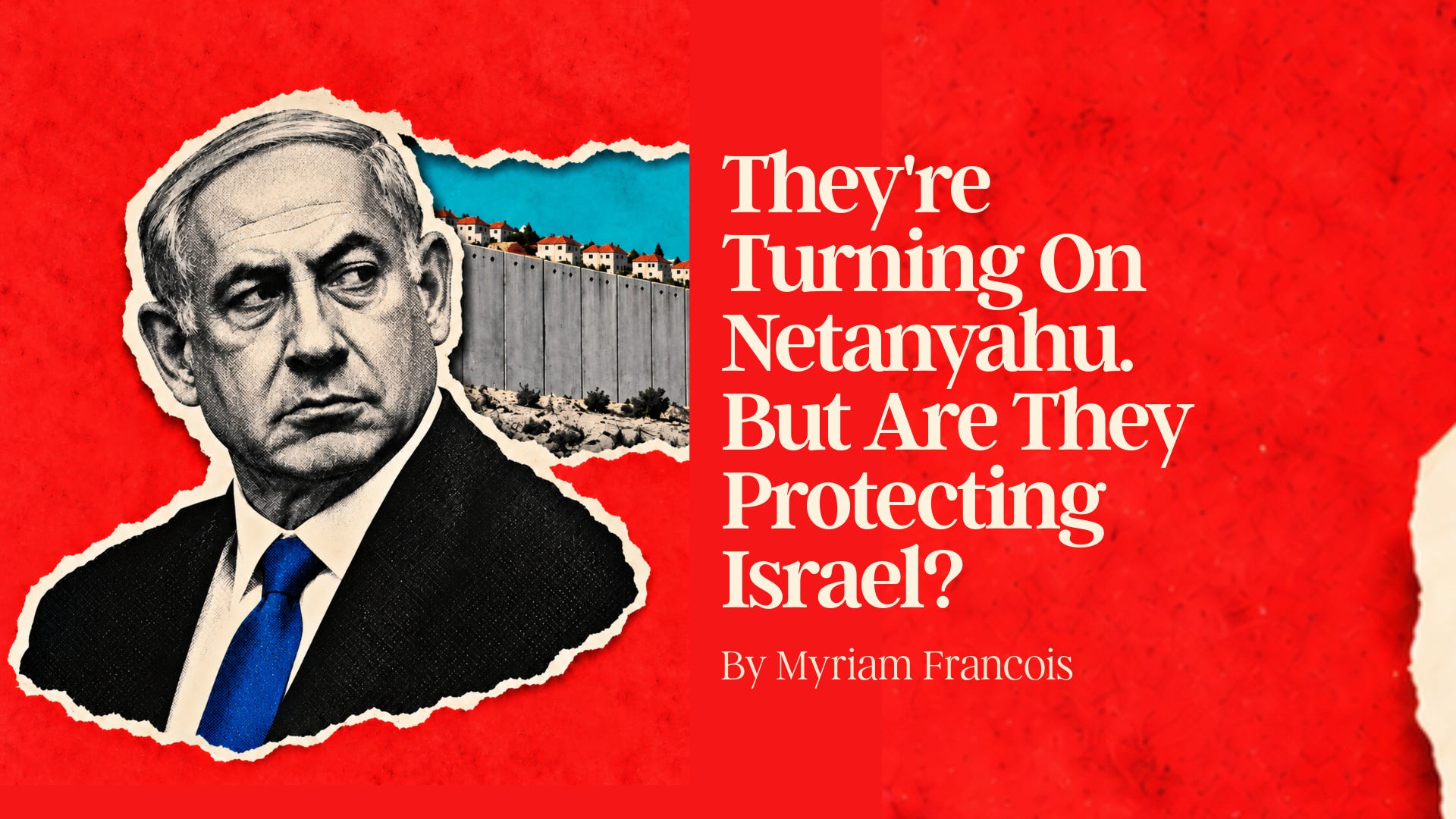
Let’s start with what appears to be an extraordinary announcement by the new Labour government, specifically from British Foreign Secretary Ed Miliband. He recently announced an import ban on goods from illegal settlements in occupied Palestine, alongside sanctions against companies that “finance or facilitate” their construction, infrastructure, and marketing.
West Bank settlement expansion has reached record levels, marked by a surge in construction approvals, outpost establishments, and administrative restructuring tracked by monitoring organizations and international observers. Over 25,000 dunams (6,200 acres) of land were officially declared “State Land” in 2024–2025 alone, marking the largest single-year land grab by the Israeli government since the 1993 Oslo Accords. In 2025, the Israeli government formally authorized 54 new settlements, while Israeli NGO Peace Now documented the establishment of 86 unofficial outposts—an average of 1 to 2 new outposts per week.
Crucial to this expansion has been the administrative restructuring introduced under Finance Minister Bezalel Smotrich. By transferring powers over land allocation, building permits, and infrastructure in Area C away from the military to a civilian “Settlement Administration,” the state provided the strongest evidence to date that settlements—far from being aberrations—are part and parcel of the Israeli state’s DNA and its continuous expansion since inception. Previously hidden under military jargon, this administrative transfer simply formalises what Palestinians have always known: the Israeli state works hand in hand with settlers, often publicly distancing itself while actively supporting and emboldening them on the ground. This is not new.
Between 2005 and 2023, Israeli human rights organization Yesh Din tracked over 1,600 police investigations into Israeli civilian violence against Palestinians in the West Bank. They found that only around 7% to 9% of investigations resulted in an indictment—and of the small fraction that went to court, a mere 3% resulted in a conviction. What’s more, between 50% and 60% of Palestinian victims of settler violence did not file official police complaints at all, due to a complete lack of trust in Israeli law enforcement or fear of administrative retaliation.
Settler violence and expansion are features of the Israeli state, not bugs; they are central to its project. No Israeli government in history has presided over zero settlement expansion. Not one. Since the 1967 War, every single Israeli administration—whether led by the right-wing Likud, the left-wing Labor Party, or centrist coalitions—has permitted, funded, or overseen ongoing settlement growth in the occupied territories.
Which brings us back to Britain and its new Foreign Secretary referring to “settler terrorists” perpetrating ethnic cleansing in the occupied West Bank. Many pundits have expressed either dismay or applause for Miliband’s statements, suggesting public pressure is finally echoing in the halls of power after three years of people marching and clamoring for sanctions against Israel’s genocide in Gaza.
So have the people won? Sanctions are forthcoming, but only on so-called illegal settlements— the suspension of trade witn Israel, a central call in response to the ongoing genocide, is not on the cards. Neither is a recognition that Israel’s violence is not simply a settler issue - its the IDF which has been sniping children in the head, burying them alive and raping Palestinians in Israel prisons. None of this is addressed through the impression created that the problem isn’t Israel per say, an ethno-nationalist fascist state engaged in ethnic cleansing and genocide since its inception, but simply its geographic fringes. And I’m calling BS.
This attempt to reconfigure Israel itself as not the problem but the settlers themselves as the main issue, is part of the wider attempt to return the entire conversation to the October 6th status quo of discussions over a two-state solution, long used as a vacant holding pen for Palestinian hopes of self-determination. The problem is that the material reality Israel has created makes a contiguous Palestinian state a fiction. The West Bank is increasingly an archipelago of encircled Palestinian enclaves, not a single territorial expanse that Palestinians control or can traverse freely. Maps produced by UN OCHA document over 600 physical movement obstacles across the West Bank, explicitly categorizing its geography as fragmented “islands.”
Even in East Jerusalem, the city is carved into enclaves where families on the same street are separated by the wall and forced to make hour-long trips through checkpoints to visit relatives directly across the road. According to B’Tselem and UN OCHA, approximately 85% of the 708 km separation wall runs inside the West Bank rather than along the 1949 Green Line. Route design explicitly cut off Palestinian neighborhoods from the rest of the city, despite their residents holding Israeli Jerusalem ID cards.
This is where the disingenuousness becomes obvious. The Israeli government is entirely aware of this; it drives these policies to ensure, as Netanyahu has repeatedly stated, that no Palestinian state can ever exist. There is no genuine commitment from Israeli leadership to a two-state solution. Consequently, current attempts to decouple Netanyahu and his cabinet’s extremists from the broader Israeli state apparatus would be laughable if they weren’t so sinister.
Britain’s position was reportedly prompted in part by Israel’s decision to press ahead with a vast settlement expansion in the E1 corridor in the heart of the West Bank. The project is designed to “bury the idea of a Palestinian state,” according to far-right Israeli minister Bezalel Smotrich, and Miliband described the issuing of construction tenders in August as a “red line.” But if the red line is anything that buries the possibility of a Palestinian state, that line was crossed long ago. Reversing the status quo—the absence of a viable, contiguous Palestinian state—would require sustained international pressure, the likes of which we have never seen applied to an Israeli government. It would require rolling back decades of settlement infrastructure, requiring a withdrawal that would dwarf the 2005 dismantling of 21 settlements inside Gaza under Ariel Sharon (a move explicitly designed by Sharon to consolidate Israel’s hold on major West Bank blocs).
In an interview with UK Fact Check Politics founder Rutam Wahab, Miliband reiterated his commitment to a Palestinian state, despite clear messaging from Israeli leadership that no such entity will be entertained. Addressing the media in late June 2026, Netanyahu explicitly declared that there is “no room for two states” between the Mediterranean Sea and the Jordan River.
I’m not sure how much clearer Israeli leadership needs to be. Yet Western governments continue to behave as if “extremism” can simply be excised from the government, even when the government itself is the embodiment of that ideology. Miliband’s messaging belongs to a growing genre of commentary that distances itself from Netanyahu’s cabinet while seeking to salvage the underlying state framework as a moderate middle ground. It is far from that.
During this same period, we’ve seen a wave of op-eds arguing for a return to the two-state status quo: Chris Smith and Baroness Helic writing for TIME in August 2026 (”A Two-State Solution Has Never Been More Vital”); Yossi Mekelberg of Chatham House arguing in Arab News (September 2026) on the necessity of putting two states back at the center of Israeli political debate; and Stephen M. Walt writing in Foreign Policy, arguing that Israel cannot force its way into long-term security without a political settlement. (You may recall Walt as co-author of The Israel Lobby and U.S. Foreign Policy alongside John Mearsheimer in 2007).
It seems the international community has decided we must return to this framework, despite every indicator showing that a contiguous Palestinian state is more unrealistic than ever. There is no willingness on the Israeli side to relinquish land, establishing legitimate Palestinian leadership remains structurally blocked (Marwan Barghouti, who could unite factions, remains in prison serving multiple life sentences), and an entire generation no longer views Israel through the lens of a standard bilateral border dispute, but as an ethno-nationalist colonial project built on ethnic cleansing and genocide. They somehow believe this genie can be put back in the bottle. It cannot.
This reality, however, is not allowed to enter mainstream policy. The priority for many Western powers remains protecting the concept of a Jewish ethno-state, even if tactical sacrifices must be made - in this case, Netenyahu, the weak link. The media circuit is suddenly full of previously silent or complicit pundits touting the need to remove Netanyahu and his “extremists”—effectively trying to rehabilitate a liberal version of the state that was simply more adept at managing our exposure to corpses on social media.
Adding to the pressure on Netanyahu, Israeli commentator and former IDF intelligence officer (Unit 8200) Shail Ben-Ephraim recently went viral for claiming that the Hannibal Directive could have been responsible for 2% to 20% of Israelis killed on October 7th. For those unfamiliar, the Hannibal Directive refers to a military protocol authorizing maximum force to prevent the capture of Israeli personnel by enemy forces, even at the risk of killing the captives themselves. Meanwhile, Hillary Clinton has joined the talk show circuit, directly implicating Netanyahu in the failure of October 7th by referencing advance warnings. This follows an explosive Haaretz investigation revealing that Sheikh Mohamed bin Zayed Al Nahyan (MBZ), President of the UAE, personally warned Netanyahu roughly 10 days before October 7th during a 45-minute call, stating that then Hamas leader Yahya Sinwar was preparing a major operation. Sources indicate MBZ was surprised by Netanyahu’s dismissive response, noting that the Prime Minister did not pass the warning to key security leadership, including Shin Bet Chief Ronen Bar or IDF Chief of Staff Herzi Halevi. Make of that what you will—the revelations have caused a massive stir in Israel as election season kicks into high gear ahead of the legislative vote on October 27, 2026. Clinton’s sudden willingness to throw Netanyahu under the bus is a clear play to a Democratic base vocally opposed to the war. But this is not about Israeli accountability, it is precisely about Israeli impunity. Netenyahu will be blamed and the entire state apparatus and every male and female soldier who was actively involved in genocide will be given a get out of jail free card, quite literally.
Overall, it’s clear a shift is underway in how public officials across Europe, the Middle East, and the US speak about Israel. It is no coincidence this is occurring as Israel enters the final stretch of its election campaign for the 26th Knesset. While Netanyahu could theoretically retain power, polling shows Likud in decline and facing potential parliamentary gridlock. External powers who prefer a more predictable diplomatic partner are signaling a preference for a return to a less chaotic world order.
My read is that we are seeing a coordinated push to return to a legacy framework in order to shield the Israeli state’s foundational legitimacy at the precise moment it is most questioned.
While initiatives like the 2026 Paris Call for the Two-State Solution (drafted by Israeli and Palestinian civil society organizations like Uniting for a Shared Future and Principles for Peace) seek to rehabilitate this path, the primary question is not whether to revive old slogans, but what Western governments are actually prepared to do to compel Israel to cede the land necessary for a state to exist. Without concrete enforcement, this renewed enthusiasm for a two-state solution functions mainly to channel public outrage away from the root causes of Palestinian suffering. The occupation and apartheid. Neither are even mentioned by officials.
With public awareness growing worldwide, support for a single democratic state free of ethno-nationalist supremacy has never been clearer even if political will in Western capitals has yet to catch up. The question remains: can these renewed diplomatic gestures contain that shift? And after so much bloodshed, should they..?